
Korean War The Battle Begins for the Frozen Chosin
November 26, 1950 - The Chinese open the Battle of the Chosin Reservoir (right). Entering the Korean Conflict in October 1950, Communist Chinese forces quickly overwhelmed isolated United Nations troops in North Korea. Among those cutoff were parts of the US X Corps which included the US 1st Marine Division, elements of the US 7th Infantry Division, and 41 Independent Commando Royal Marines near Chosin Reservoir. Led by Major General Oliver P. Smith, the trapped forces fought a brutal 10-day battle in extreme cold and snow to break through the Chinese lines. In the process they effectively destroyed seven Chinese divisions before reaching safety. During the campaign, almost every UN soldier suffered from some degree of frostbite. Having escaped from Chosin Reservoir, Smith's men were evacuated from the port of Hungnam along with the rest of X Corps.
The fighting around Chosin Reservoir lasted from November 26 to December 11, 1950.
Battle of Chosin Reservoir Overview:
On October 25, 1950, with General Douglas MacArthur's United Nations forces closing in a victorious end to the Korean War, Communist Chinese forces began pouring across the border. Striking the spread out UN troops with overwhelming force, they compelled them to retreat all across the front. In northeastern Korea, the US X Corps, led by Major General Ned Almond, was strung out with its units unable to support each other. Those units near the Chosin (Changjin) Reservoir included the 1st Marine Division and elements of the 7th Infantry Division.
Advancing quickly, the Ninth Army Group of the People's Liberation Army (PLA) blunted X Corps advance and swarmed around the UN troops at Chosin. Alerted to their predicament, Almond ordered the commander of the 1st Marine Division, Major General Oliver P. Smith, to begin a fighting retreat back towards the coast.
Commencing on November 26, Smith's men endured extreme cold and severe weather. The next day, the 5th and 7th Marines attacked from their positions near Yudam-ni, on the west bank of the reservoir, with some success against the PLA forces in the area. Over the next three days the 1st Marine Division successfully defended their positions at Yudam-ni and Hagaru-ri against Chinese human wave assaults. On November 29, Smith contacted Colonel "Chesty" Puller, commanding the 1st Marine Regiment, at Koto-ri and asked him to assemble a task force to reopen the road from there to Hagaru-ri.
Complying, Puller formed a force consisting of Lieutenant Colonel Douglas B. Drysdale's 41 Independent Commando (Royal Marines Battalion), G Company (1st Marines), B Company (31st Infantry), and other rear echelon troops. Numbering 900 men, the 140-vehicle task force departed at 9:30 AM on the 29th, with Drysdale in command. Pushing up the road to Hargaru-ri, the task force became bogged down after being ambushed by Chinese troops. Fighting in an area that was dubbed "Hell Fire Valley," Drysdale was reinforced by tanks sent by Puller.
Pressing on, Drysdale's men ran a gauntlet of fire and reached Hagaru-ri with the bulk of 41 Commando, G Company, and the tanks. During the attack, the B Company, 31st Infantry, became separated and isolated along the road. While most were killed or captured, some were able to escape back to Koto-ri. While the Marines were fighting to the west, the 31st Regimental Combat Team (RCT) of the 7th Infantry was battling for its life on the eastern shore of the reservoir.
Repeatedly assaulted by the 80th and 81st PLA divisions, the 3,000-man 31st RCT was worn down and overrun. Some survivors of the unit reached the Marine lines at Hagaru-ri on December 2. Holding his position at Hagaru-ri, Smith ordered the 5th and 7th Marines to abandon the area around Yudam-ni and link up with the rest of the division. Fighting a brutal three-day battle, the Marines entered Hagaru-ri on December 4. Two days later, Smith's command began fighting its way back to Koto-ri.
Battling overwhelming odds, the Marines and other elements of X Corps attacked continuously as they moved towards the port of Hungnam. A highlight of the campaign occurred on December 9, when a bridge was constructed over a 1,500-ft. A gorge between Koto-ri and Chinhung-ni using pre-fabricated bridge sections dropped by the US Air Force. Cutting through the enemy, the last of the "Frozen Chosin" reached Hungnam on December 11.
Aftermath
While not a victory in the classic sense, the withdrawal from the Chosin Reservoir is revered as a high point in the history of the US Marine Corps. In the fighting, the Marines and other UN troops effectively destroyed or crippled seven Chinese divisions that attempted to block their progress. Marine losses in the campaign numbered 836 killed and 12,000 wounded. Most of the latter were frostbite injuries inflicted by the severe cold and winter weather. US Army losses numbered around 2,000 killed and 1,000 wounded. Precise casualties for the Chinese are not known, but are estimated at 35,000 killed. Upon reaching Hungnam, the veterans of Chosin Reservoir were evacuated as part of the large amphibious operation to rescue UN troops from northeastern Korea.
Dimension:
596 x 795
File Size:
104.3 Kb

Like

Love

HaHa

Yay

Wow

Hate
Be the first person to like this.
Like
Love
HaHa
Yay
Wow
Hate
Be the first person like this
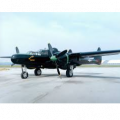
P61 Black Widow
Should McArthur have held at the Yalu River?
Like
Love
HaHa
Yay
Wow
Hate